Where Two Worlds Met: The History of Day of the Dead
The story of Día de los Muertos spans thousands of years. Long before Europeans set foot in the Americas, indigenous Mesoamerican peoples—such as the Aztecs, Maya, and Zapotecs—viewed death as an intrinsic chapter of the human story, not a terrifying finale. In Aztec tradition, departed souls traversed a challenging journey through the underworld before reaching rest, and living relatives provided gifts to aid them on their way.
When Spanish colonists arrived in the 16th century, they brought Catholic traditions like All Saints’ Day and All Souls’ Day. Over time, indigenous beliefs and Catholic observances braided together, creating the rich, multi-layered Mexican celebration observed today.
Crafting the Sanctuary: Symbols of Remembrance
To invite loved ones back, families build magnificent spaces of welcome called ofrendas (altars). Built on multiple tiers to represent the journey between worlds, these altars are filled with personal items and powerful symbols:
-
Photos and Keepsakes: Images of late family members sit at the center, ensuring their stories and faces remain vivid for younger generations.
-
Cempasúchil (Marigold Petals): Known for their radiant orange color and distinct fragrance, pathways of marigold petals guide traveling souls straight to their family's doorstep.
-
Pan de Muerto: A golden, anise-flavored sweet bread baked with dough shapes resembling crossbones, served as nourishment for the weary spirits.
-
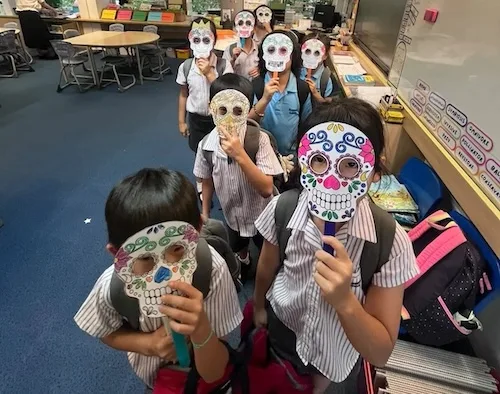
Calaveras: Artfully decorated sugar skulls inscribed with names, turning the symbol of a skull from something chilling into something joyful and sweet.
-
Papel Picado: Delicate, hand-cut tissue paper banners that flutter in the home, whispering that the spirits have safely arrived on the wind.
Humor, Art, and La Catrina
There is a playful side to Día de los Muertos, too. Mexican culture embraces humor as a way to soften life's hardest truths.
One of the holiday's most famous figures is La Catrina—a tall, skeletal lady dressed in an extravagant 19th-century bonnet. Originally created by artist José Guadalupe Posada to gently poke fun at high-society vanity, she stands as a lighthearted reminder that underneath all our clothes, titles, and wealth, we are all the same.
Similarly, people write Calaveras Literarias—witty, affectionate poems about living friends and colleagues, humorously teasing how they might outsmart or bargain with Death.
A Living Legacy: Connecting Language and Culture
Recognised by UNESCO as part of humanity's Intangible Cultural Heritage, Día de los Muertos offers a comforting lesson for people of any background. It reminds us that memory is powerful, community is essential, and love is enduring. As long as someone is remembered, talked about, and celebrated, they are never truly gone.