
Registration Open
New Full Day Offer

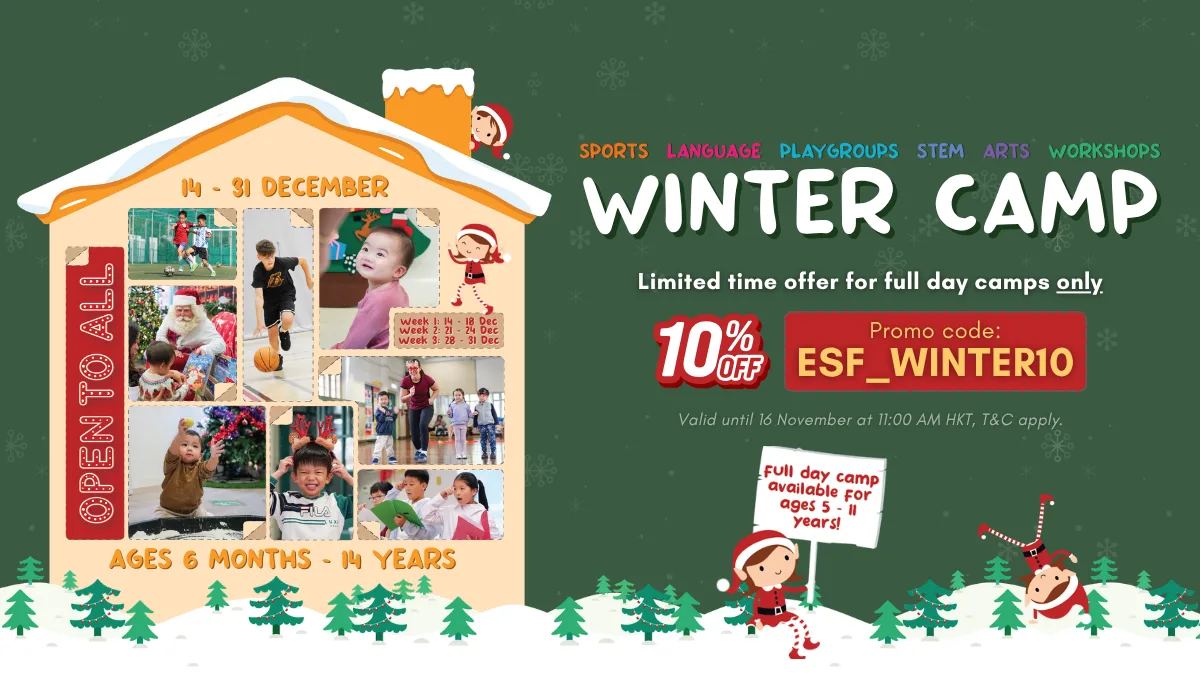
Unwrap Holiday Magic at ESF Winter Camps!

Spark your child’s creativity and confidence this season! Led by qualified educators, our English-immersive camps cover Languages, 6+ Sports, Playgroups, STEM & Arts.

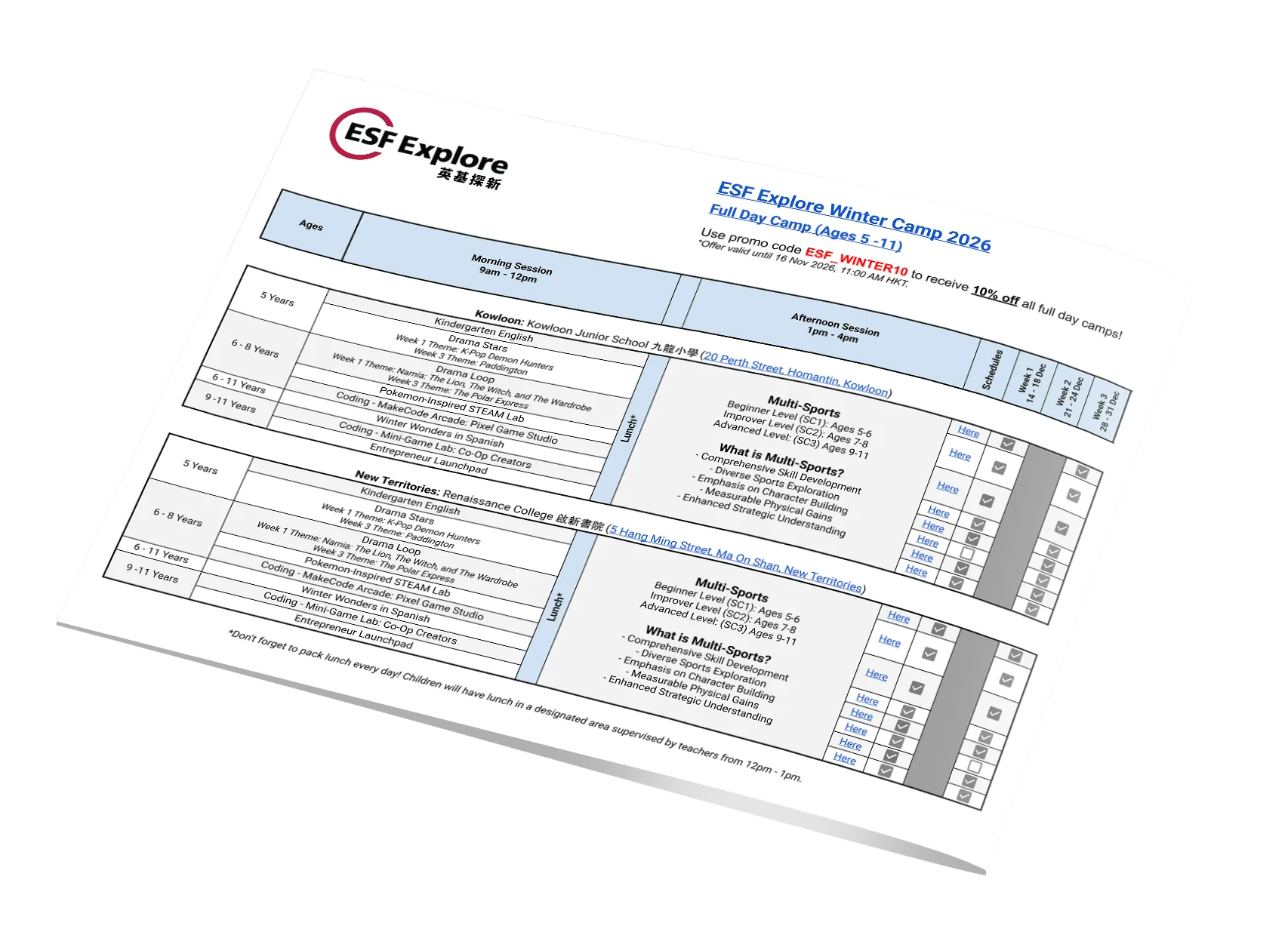
❄️ NEW: Winter Full-Day Camps (Ages 5–11)

Combine morning classroom learning sessions with afternoon multi-sports for a full day of learning and fun! Available at Kowloon Junior School & Renaissance College

🎁 FULL DAY CAMP OFFER: Enjoy 10% OFF

Promo Code: ESF_WINTER10

(Valid until 16 Nov 2026, 11:00 AM cut-off)

Both week-long programmes and single workshops available.

Click HERE to browse our programme listing
Click HERE to browse the Full Day Camp listing 


Follow us on social media!

中
cart
MENU

    Unlocking the Magic of Reading: How to Help Your Child Love Books (Even in a Second Language)

    22nd Oct 2026
    Unlocking the Magic of Reading: How to Help Your Child Love Books (Even in a Second Language)

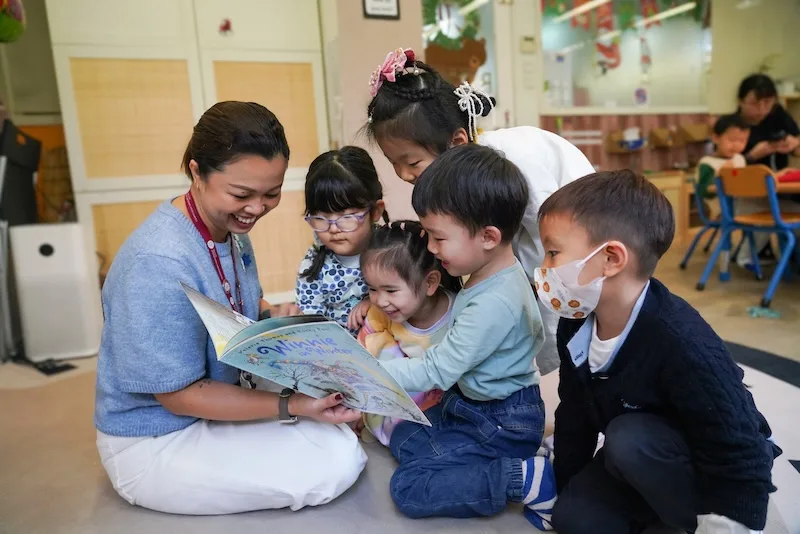
    In a world full of glowing screens and quick videos, picking up a book might seem a bit old-fashioned. But turning the page is still one of the best gifts we can give our kids. Reading isn’t just a school chore—it’s how children grow their minds, build empathy, and learn to imagine big dreams.

    If your child is learning English as a second language, reading can feel like a steep hill to climb. The good news? You don't need to force long study sessions to help them fall in love with stories.

    Why Reading Matters So Much

    • It Grows Their Brain: Every story exposes kids to richer words and sentence patterns than everyday conversation ever could.

    • It Builds Kindness: When children step into a character’s shoes, they learn what it feels like to walk in someone else's world.

    • It Sparks Imagination: Unlike watching TV, reading forces the brain to picture the scene itself, making kids creative problem-solvers.

    Easy Ways to Support Young English Learners

    1. Embrace Pictures and Graphic Novels: Don't shy away from comic books or illustrated stories! Pictures give vital context clues, helping kids figure out hard words without getting frustrated.

    2. Read Together with Audiobooks: Listening to an English audiobook while following along in a physical book helps children connect how written words sound in real life.

    3. Keep Their First Language Alive: Literacy in a native language actually makes learning English easier. Reading bilingual books or stories in your home language builds strong language skills that carry right over to English.

    4. Follow Their Passions: Let them choose what to read—whether it's a book about dinosaurs, sports magazines, or fairy tales. When kids care about the topic, the language barrier feels much smaller.

    Parent Tip:
    Focus on fun, not perfection. Try not to interrupt every single mispronounced word. Instead, talk about the story together and celebrate every small step forward!